Grease Trap Cleaning & FOG Compliance
Scheduled grease trap pumping, cleaning, and service reporting matched to your kitchen’s output — indoor traps, outdoor interceptors, and everything in between.
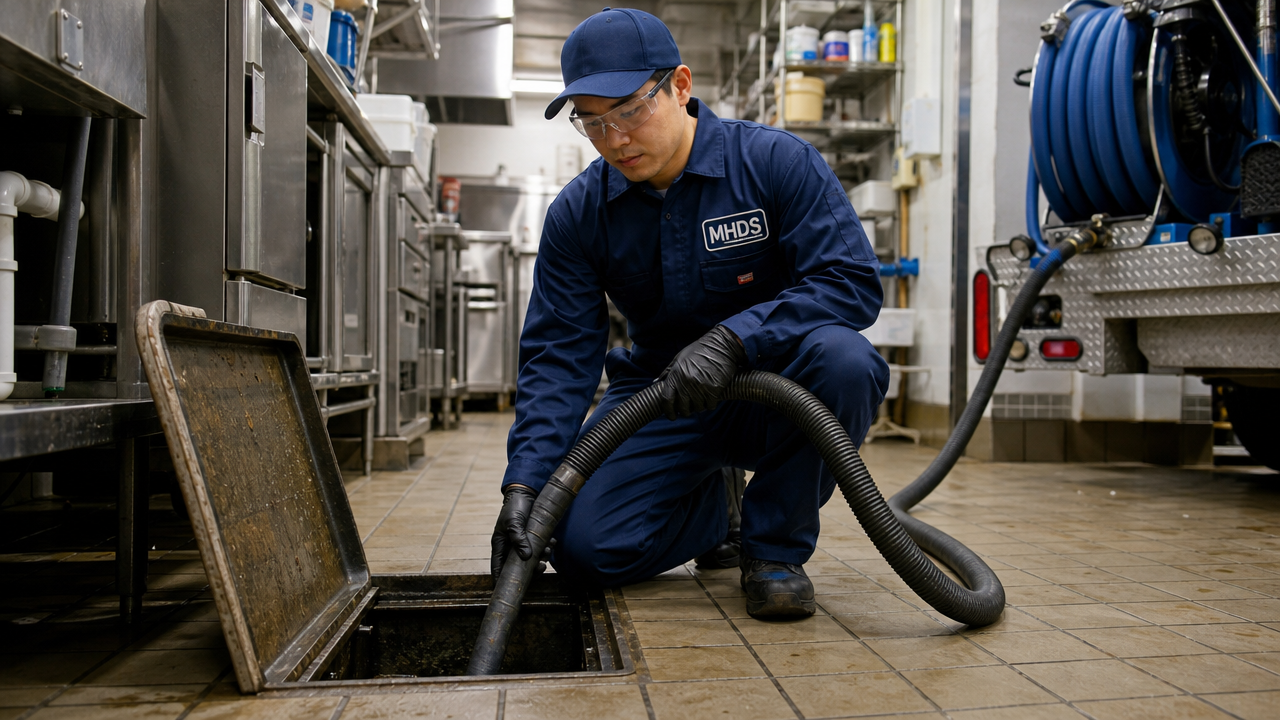
Every Configuration, One Vendor
Whatever setup your kitchen has, we service it and document it.
Indoor Under-Sink Traps
All sizes, pumped and cleaned on a schedule matched to your kitchen’s volume.
Outdoor In-Ground Interceptors
Larger-capacity units common in bigger kitchens and older commercial buildings.
Flow-Through Recovery Devices
Serviced and maintained as part of your regular schedule.
Service Manifests
A signed manifest after every pump-out — your FOG compliance record.
Frequency Matched to Volume
Scheduled to your kitchen’s actual grease output, not a generic calendar.
Full Pump-Out & Cleaning
Not just a skim — the trap is pumped, scraped, and cleaned to reset its capacity.
A Separate Compliance Track From Fire Code
Grease trap compliance runs on a completely separate track from NFPA 96 fire code — it’s governed by local water and sewer authorities through FOG (fats, oils, grease) pretreatment programs. Passing a fire inspection doesn’t mean you’re covered here, and vice versa.
An overfull or neglected grease trap doesn’t just risk a violation — it causes drain backups and sewer blockages that can shut a kitchen down mid-service. Scheduled maintenance is far cheaper than an emergency call.
💧 Separate From Fire Code
FOG compliance is enforced independently by local water authorities, not the fire marshal.
🚫 Backups Are Preventable
Most drain backups trace back to a grease trap that was pumped too infrequently for the kitchen’s volume.
📄 Manifests Matter
A signed service manifest after every visit is what auditors and inspectors ask to see first.
From Assessment to Manifest in Four Steps
Volume Assessment
We evaluate your trap size, configuration, and kitchen output to set the right schedule.
Scheduled Pump-Out
Service scheduled on a recurring basis, matched to how fast your trap fills.
Full Clean & Reset
Trap pumped, scraped, and cleaned to restore full capacity.
Manifest Provided
A signed service manifest handed to you — your FOG compliance record.
Before & After
A grease trap pumped, scraped and cleaned.
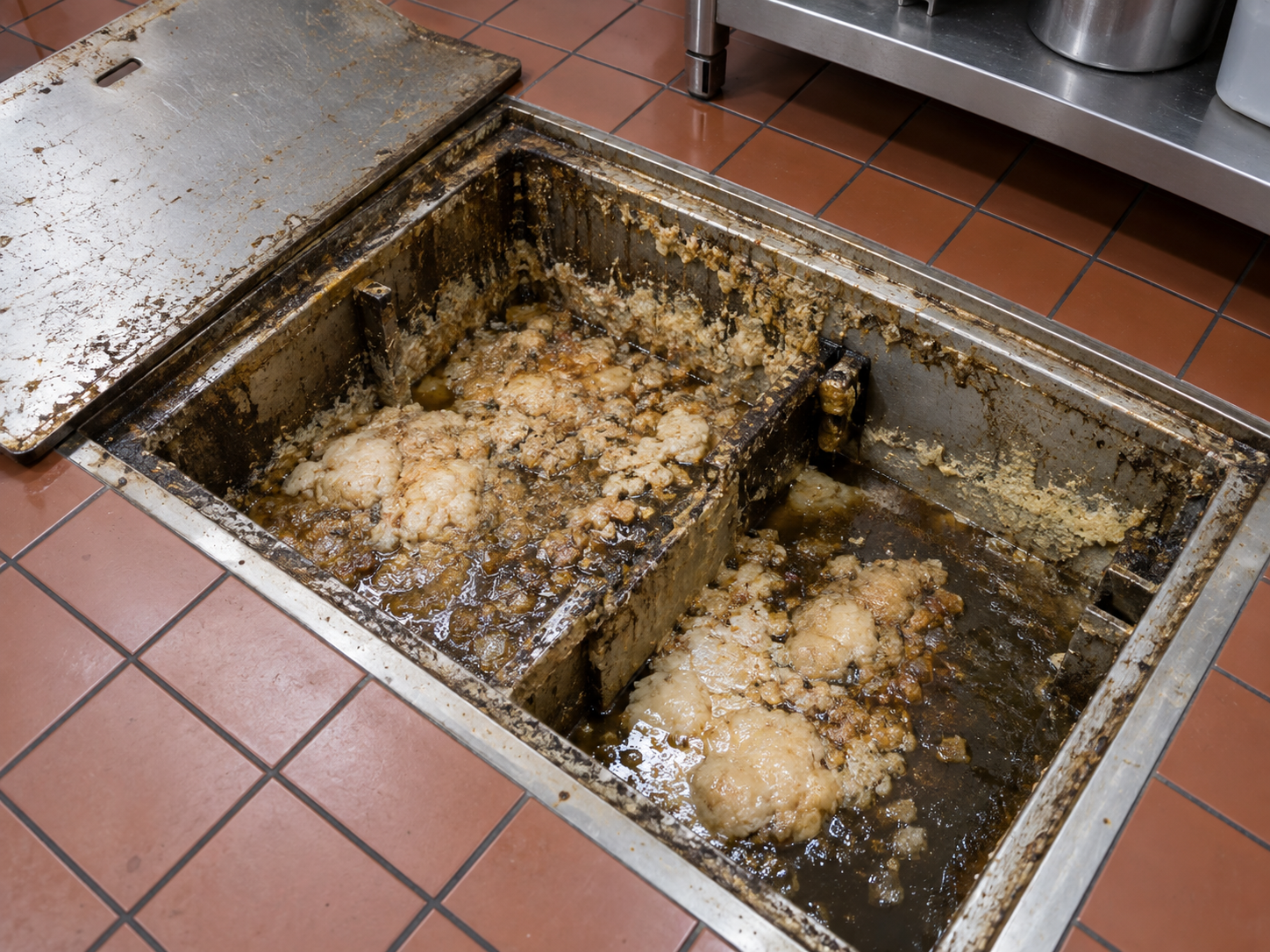
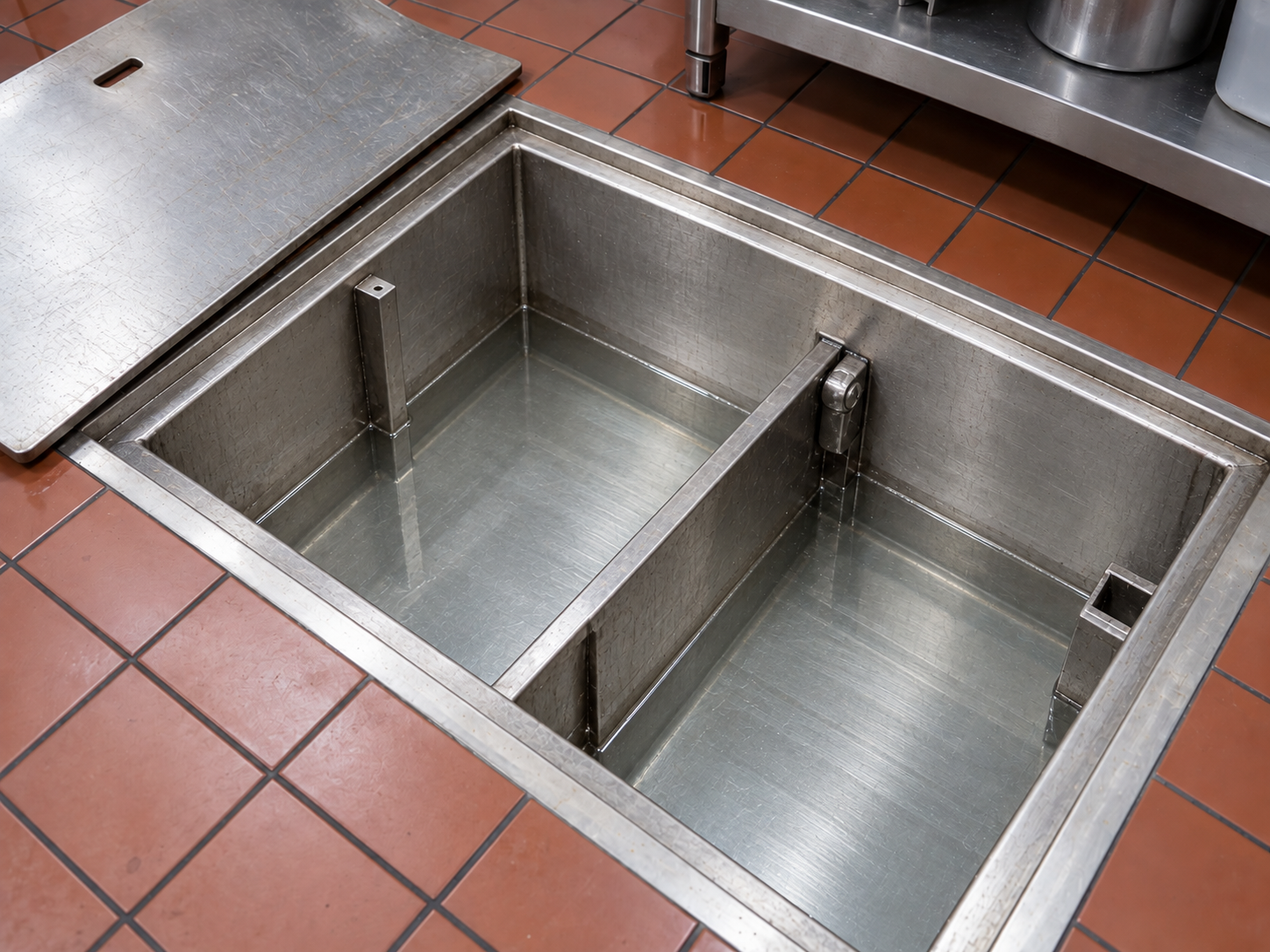
Grease trap cleaning — before and after
How Often Should a Grease Trap Be Pumped?
General industry guidance by trap type and kitchen volume — your exact schedule depends on actual output, which we assess directly.
| Trap Type | Typical Setting | General Frequency |
|---|---|---|
| Small indoor under-sink trap | Cafés, low-volume kitchens | Every 1-2 Months |
| Mid-size indoor trap | Full-service restaurants | Monthly to Quarterly |
| Outdoor in-ground interceptor | High-volume or multi-tenant buildings | Quarterly |
| Flow-through recovery device | Varies by manufacturer spec | Per Manufacturer Guidance |
⚠️ Most local codes require pumping once a trap reaches 25% capacity of grease and solids. We assess your actual accumulation rate and recommend a schedule accordingly.
Other Ways We Help Your Kitchen
Kitchen Exhaust System Cleaning
Hood, plenum, duct, fan, and filters cleaned to bare metal per NFPA 96.
Learn More →Common Questions
How often should a grease trap be pumped?
Most local codes require pumping once the trap reaches 25% capacity of grease and solids — roughly every 1-3 months for a small under-sink trap, and monthly to quarterly for a larger interceptor, depending on your kitchen’s output.
What happens if I don’t maintain my grease trap?
An overfull or neglected trap can cause drain backups, sewer line blockages, and FOG compliance violations — all of which can mean fines or a forced temporary closure.
What’s the difference between indoor and outdoor grease traps?
Indoor under-sink traps are smaller and typically need more frequent service. Outdoor in-ground interceptors handle higher volume and are common in larger or older buildings. We service both, plus flow-through recovery devices.
Do you provide documentation after each pump-out?
Yes — every visit includes a service manifest documenting volume pumped, trap condition, and disposal, which serves as your FOG compliance record.
Ready to Schedule Grease Trap Service?
Free quote, no obligation — most callers hear back within minutes.
Tell Us About Your Setup
We’ll follow up right away — most callers hear back within minutes.
Prefer to talk? Call any time, 24/7:
📞 1-866-804-9157Free itemized quote · You don’t pay until you’re satisfied