Kitchen Exhaust System Cleaning — Hood, Plenum, Duct, Fan & Filters
One comprehensive cleaning covers your entire exhaust system, top to bottom — not just the hood. Cleaned to bare metal, documented, and ready for your fire marshal.
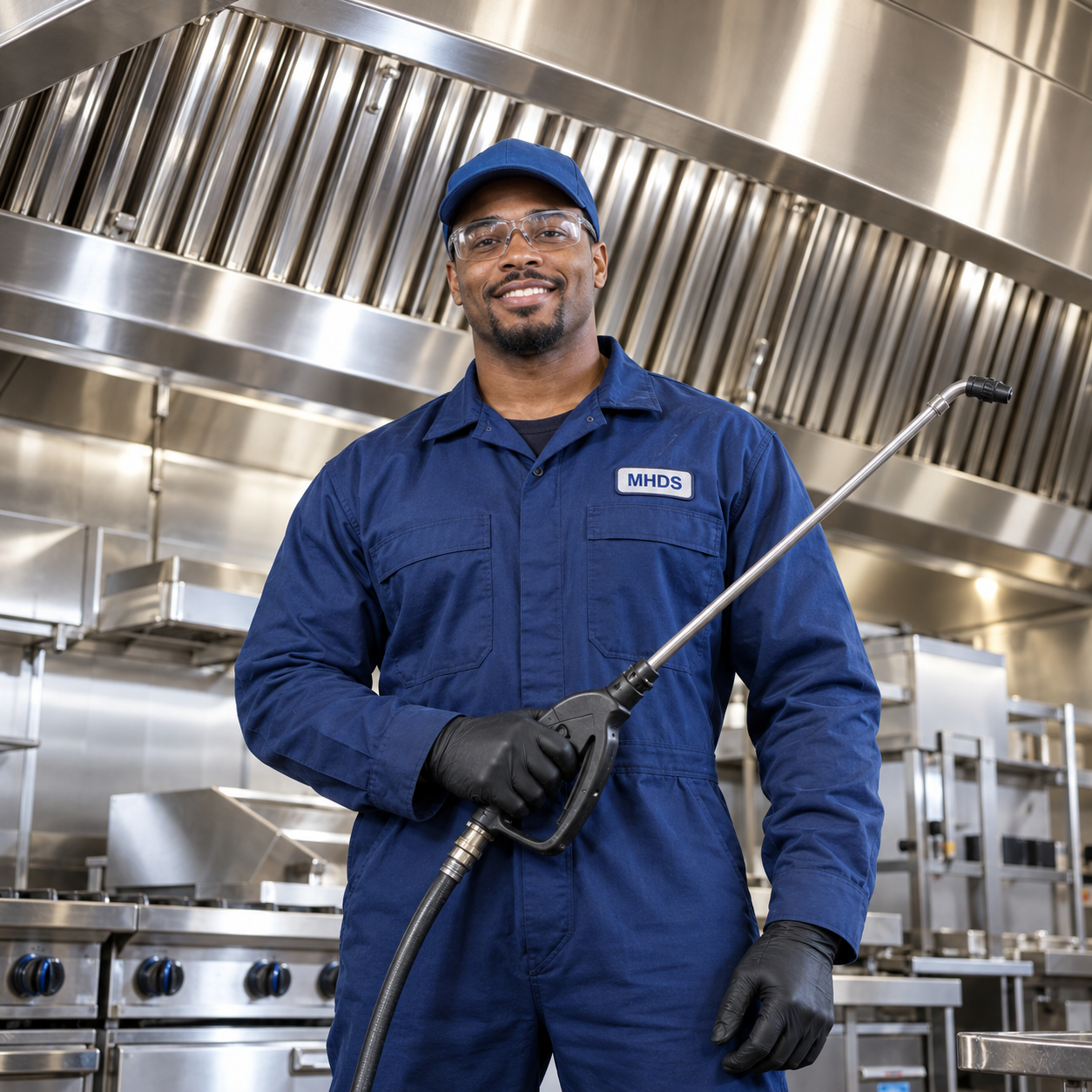
Every Part of the System, Cleaned
A “full” exhaust cleaning means exactly that — we don’t stop at the parts you can see from the kitchen floor.
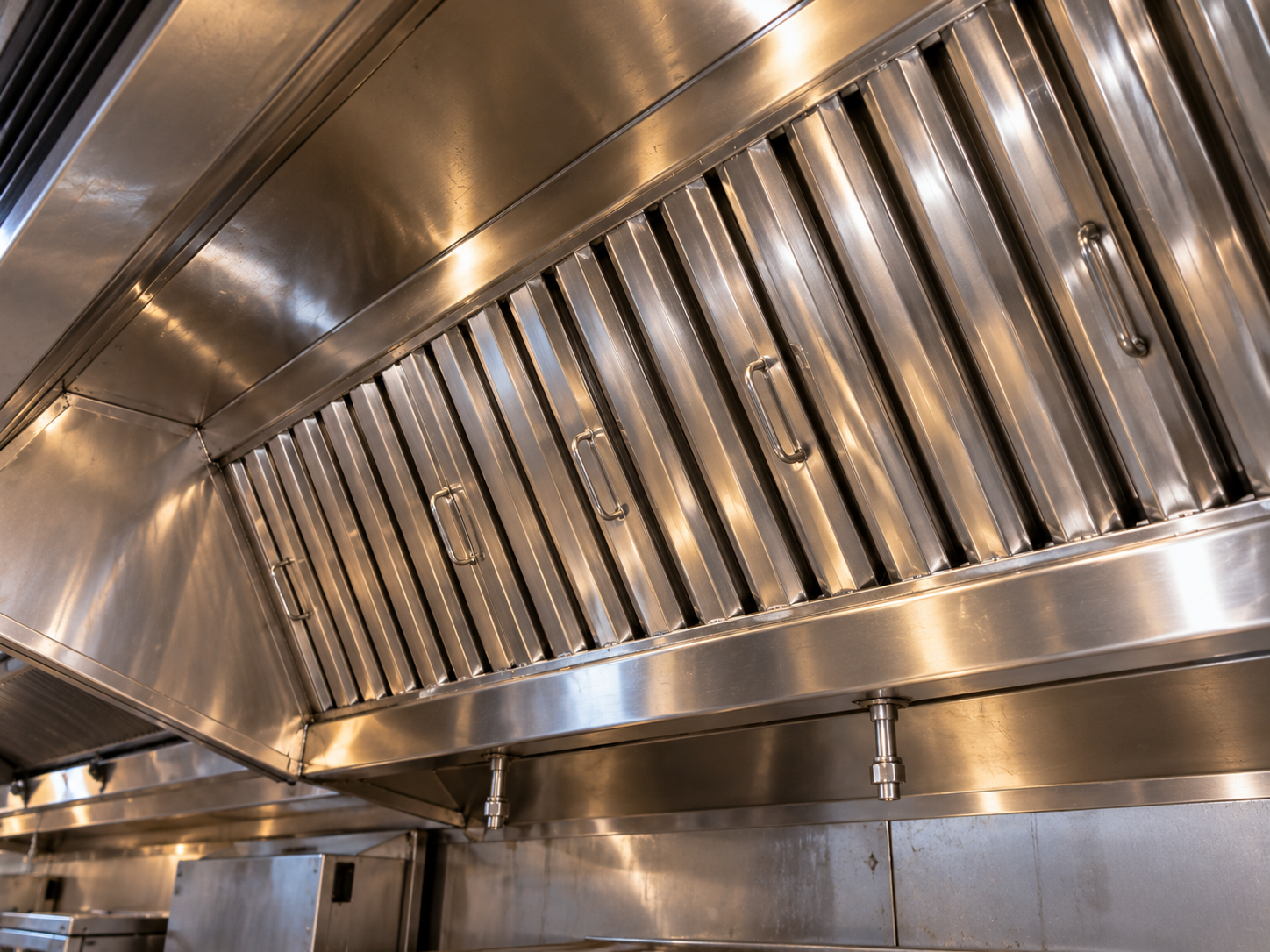
Hood
Interior and exterior surfaces degreased to bare metal, including the hood skin and grease cup.
Plenum
The grease intercept chamber above the filters, cleaned out — a spot most “quick clean” services skip entirely.
Duct
The full duct run brushed, scraped, and cleaned of accumulated grease — not just wiped at the access points.
Fan
The rooftop exhaust fan disassembled, degreased, cleaned, and reset — one of the most fire-critical components in the system.
Filters
Baffle filters removed and deep-soaked to restore airflow, or replaced if worn beyond an effective clean.
Why a Hood-Only Cleaning Isn’t Enough
A lot of “cheap” hood cleaning services only touch what’s visible from the kitchen floor — the hood surface and maybe the filters. That leaves the plenum, duct, and exhaust fan full of grease, which is exactly where most kitchen exhaust fires start.
Under NFPA 96, an inspector or fire marshal can request access to the duct, plenum, and fan housing, not just the hood. A partial cleaning can still fail inspection even if the hood looks spotless.
MidAtlantic Hood & Duct cleans the complete system every time — hood, plenum, duct, fan, and filters — and documents it with a signed service report you can hand directly to an inspector.
🔥 Where Fires Actually Start
Grease buildup in ductwork and plenums is a leading cause of commercial kitchen fires — not the hood surface itself.
📋 What Inspectors Check
NFPA 96 inspections can include duct and plenum access points, not just visible hood surfaces.
💰 Cost of a Partial Clean
A cheap “hood only” service often means paying twice — once for the quick clean, again when it fails inspection.
From Quote to Certificate in Four Steps
Free Assessment & Quote
We review your hood configuration, duct run, and cooking volume for an accurate quote.
Kitchen Protection Setup
Floors and equipment covered before any cleaning begins — no mess left behind.
Full-System Deep Clean
Hood, plenum, duct, fan, and filters cleaned to bare metal per NFPA 96 standards.
Documentation Provided
A signed service report handed to you on-site — your compliance record for any inspector.
Before & After
Real jobs from real Mid-Atlantic kitchens.
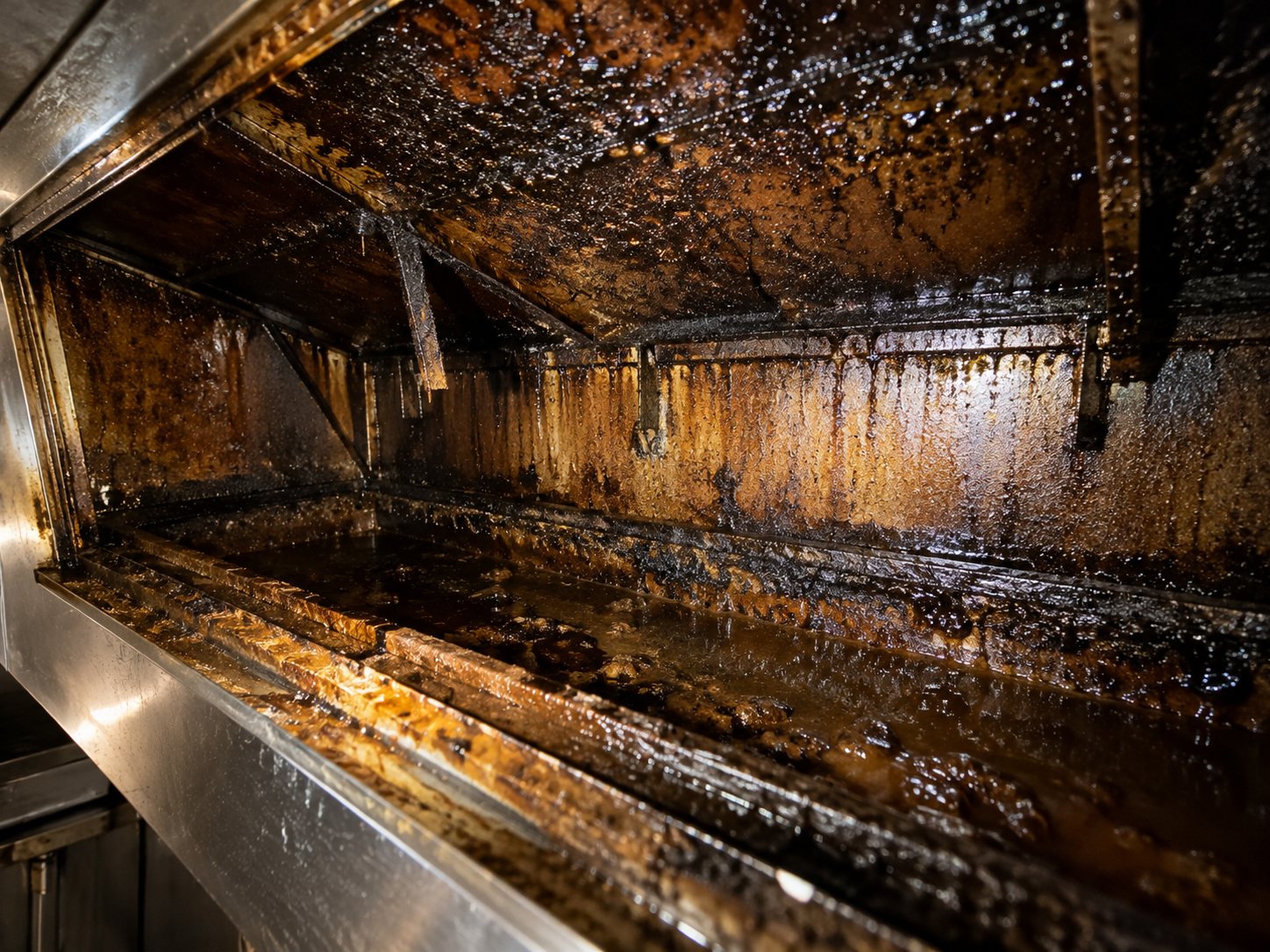
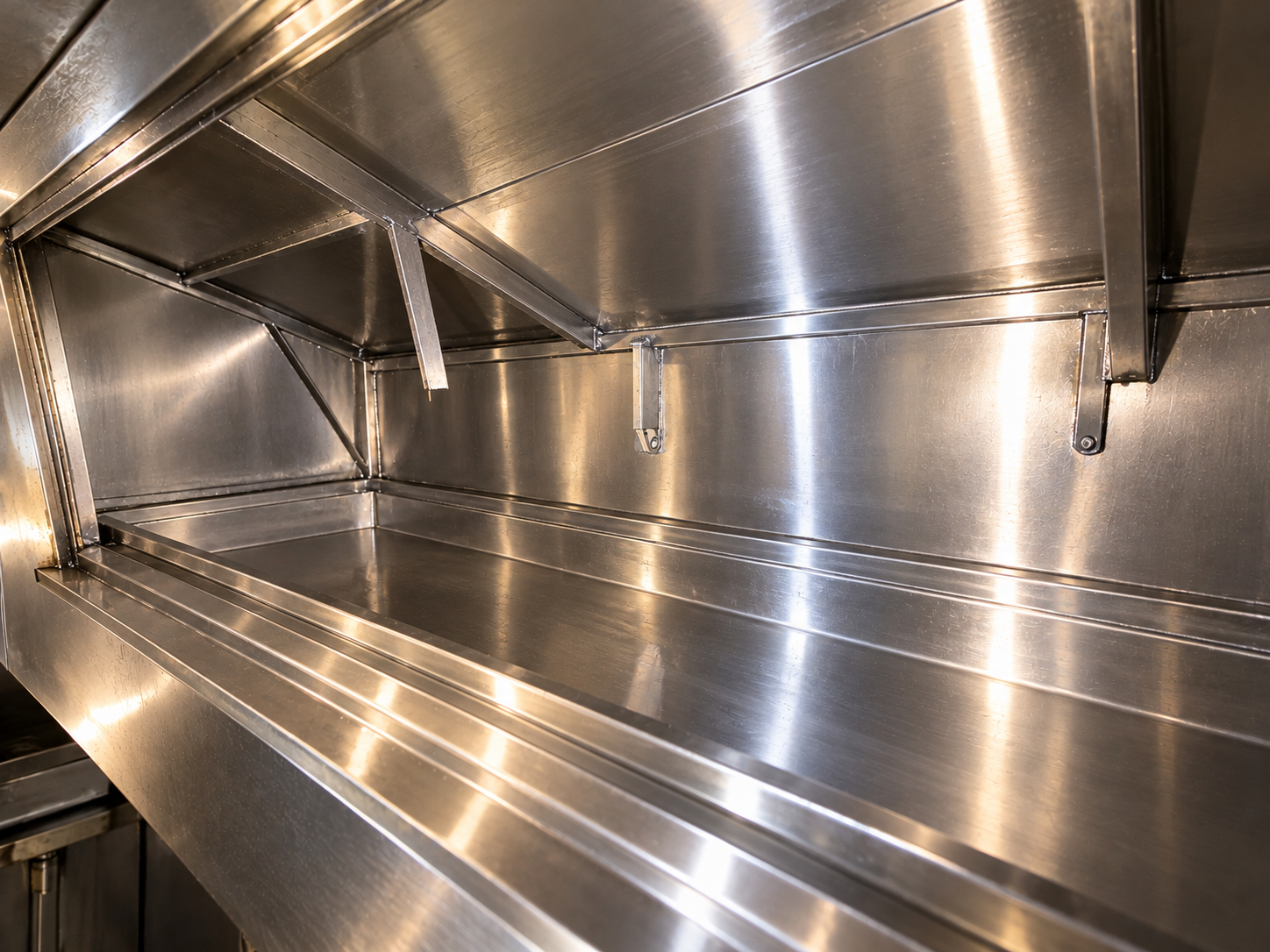
Full hood & duct clean — restaurant, Pennsylvania
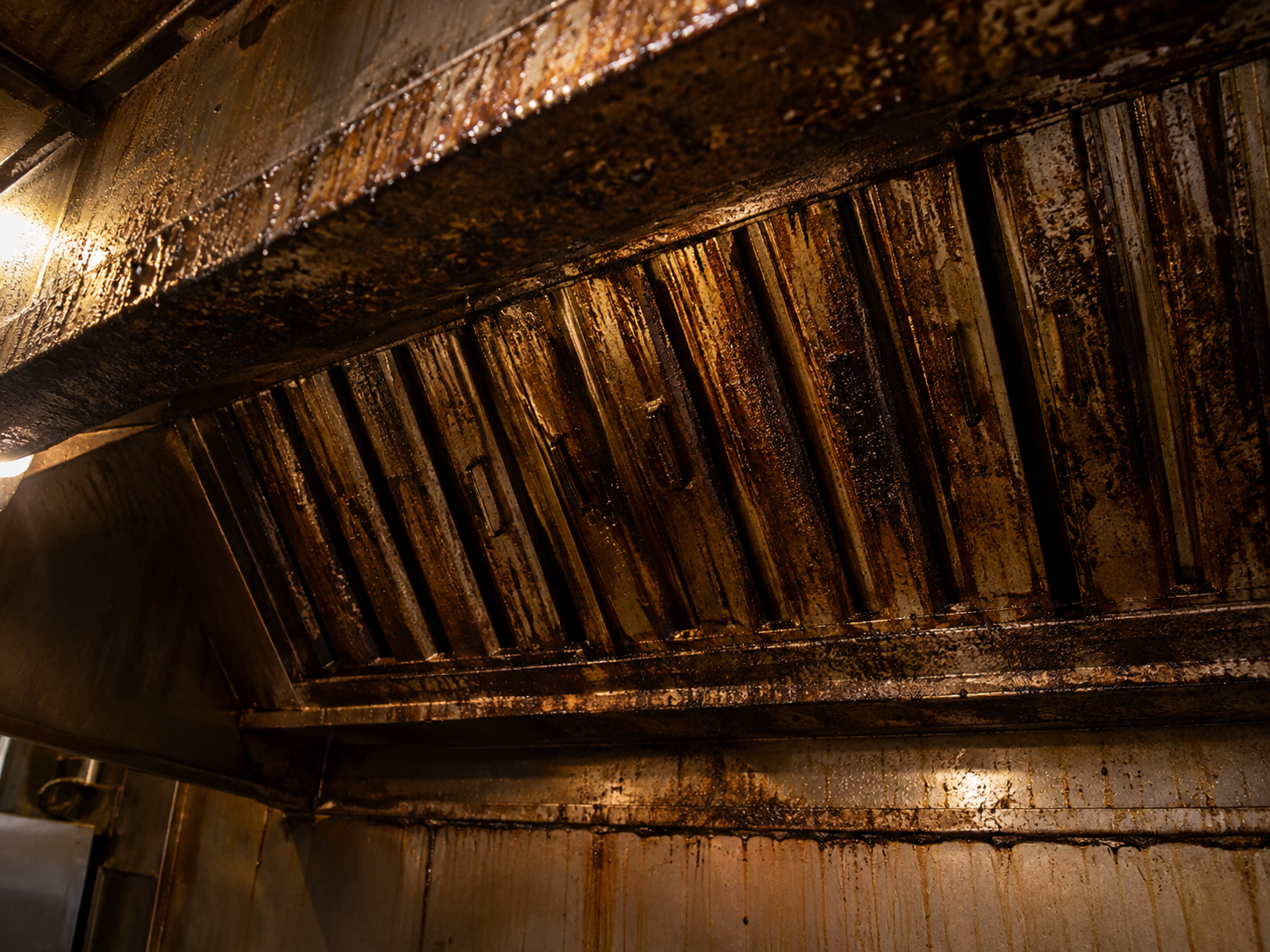
Plenum & baffle filter clean — Delaware
How Often Should This Be Done?
General NFPA 96 frequency guidance — your exact schedule depends on your kitchen’s specific volume and equipment.
| Cooking Type | Recommended Frequency | Typical Setting |
|---|---|---|
| Solid fuel (wood, charcoal) | Monthly | BBQ, wood-fired ovens |
| High-volume / 24-hour | Every 1-3 Months | Fast food, high-volume diners |
| Moderate-volume | Every 6 Months | Full-service restaurants |
| Low-volume / seasonal | Annually | Churches, seasonal venues |
Other Ways We Help Your Kitchen
Additional Exhaust Services
Access panels, fan repair & maintenance, globes, filter exchange, hinge kits, and grease containment systems.
Learn More →Full Kitchen Detailing
Deep clean for cooking equipment, floors, walls, and prep areas — beyond just the exhaust system.
Learn More →Grease Trap Cleaning
Scheduled grease trap pumping and FOG compliance to prevent blockages and violations.
Learn More →Common Questions
Does this include the ductwork, plenum, and exhaust fan, or just the hood and filters?
Kitchen exhaust system cleaning covers the entire system: hood interior and exterior, the plenum, the full duct run, the exhaust fan, and the baffle filters. Cleaning only the hood and filters leaves grease buildup in the duct, plenum, and fan housing, which is a fire hazard and a common inspection failure point.
What’s a baffle filter and why does it need cleaning?
Baffle filters are the metal grease filters mounted inside the hood that capture grease-laden vapor before it enters the duct. Clogged filters reduce airflow and let more grease pass into the ductwork.
How long does a full exhaust cleaning take?
Most single-hood systems take 2-4 hours. Larger or multi-hood systems, or systems that haven’t been cleaned in a long time, can take longer — we give you a time estimate with your quote.
Do you provide documentation after the job?
Yes — every job includes a signed service report documenting what was cleaned and when, your compliance record for inspectors and insurance carriers.
How often does this need to be done?
Under NFPA 96, it depends on cooking volume and fuel type — monthly for solid-fuel cooking, every 1-3 months for high-volume kitchens, every 6 months for moderate volume, annually for low-volume or seasonal operations.
Ready to Schedule Your Full Exhaust Cleaning?
Free quote, no obligation — most callers hear back within minutes.
Tell Us About Your Kitchen
We’ll follow up right away — most callers hear back within minutes.
Prefer to talk? Call any time, 24/7:
📞 1-866-804-9157Free itemized quote · You don’t pay until you’re satisfied